How custom t-shirts Are Made: The Complete Manufacturing Process Step-by-Step
Unlock your custom t-shirt vision! See the full manufacturing process. Get a Free Quote today!
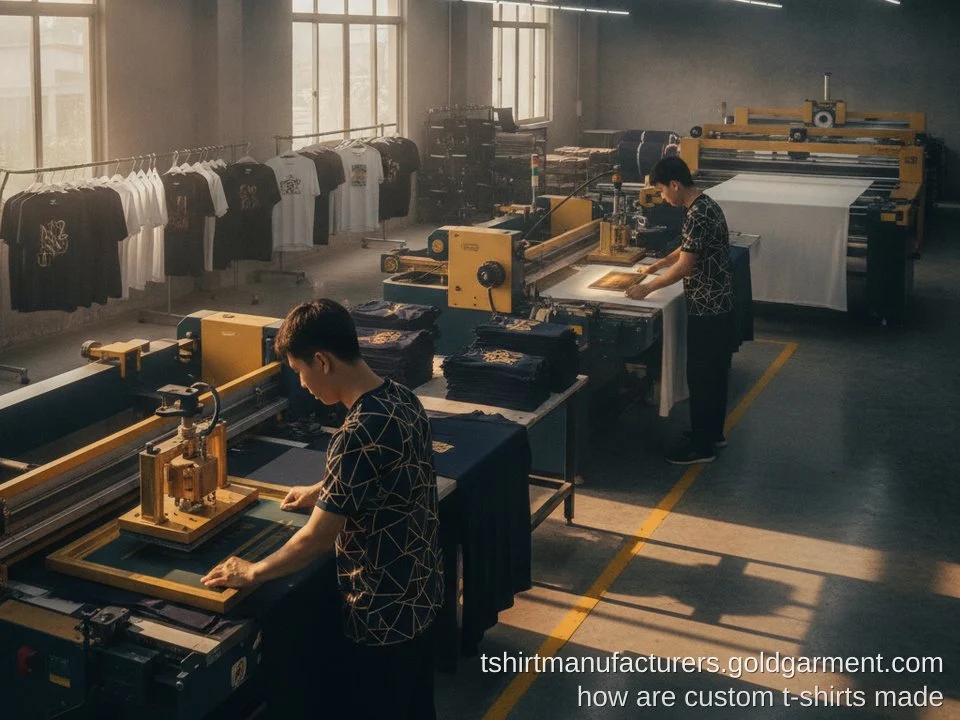
How Custom T-Shirts Are Made: The Complete Manufacturing Process Step-by-Step
For brands and businesses looking to create their own unique apparel lines or promotional merchandise, understanding how custom t-shirts are made is crucial. This comprehensive guide breaks down the entire t-shirt production process, from initial design to the final packaged product. Whether you're a first-time buyer or a seasoned sourcing manager, gaining insight into these garment manufacturing steps ensures you can partner effectively with a reliable manufacturer and achieve your desired outcome. At Gold Garment, based in Ho Chi Minh City, Vietnam, we pride ourselves on transparency and quality throughout this intricate journey.
The world of custom apparel manufacturing is a fascinating blend of art, science, and meticulous execution. Each stage plays a vital role in transforming raw materials into a wearable piece of art that represents your brand. As a professional t-shirt manufacturer with over a decade of experience, we've refined our processes to deliver exceptional quality and value, offering factory-direct pricing and worldwide shipping. You can explore the intricacies of our operations and the benefits of sourcing from Vietnam through our detailed insights into Gold Garment t-shirt production.
This step-by-step walkthrough is designed to demystify the journey of a custom t-shirt. We'll cover everything from the selection of fabrics to the final quality checks, providing you with the knowledge to make informed decisions when choosing a partner for your apparel needs. Understanding the entire t-shirt production process empowers you to communicate your requirements clearly and ensure a smooth, efficient manufacturing experience.
1. Design and Pre-Production
The journey begins with your vision. This phase involves conceptualization, design creation, and technical preparation for manufacturing. It's where your ideas take shape and are translated into production-ready specifications.
a. Design Conception
Your design is the heart of your custom t-shirt. This can be anything from a simple logo to a complex graphic. Designers will create digital mockups, ensuring that the artwork is suitable for printing methods and the chosen fabric. High-resolution files are essential at this stage.
b. Material Selection
The fabric choice significantly impacts the feel, durability, and appearance of the t-shirt. Common materials include cotton (ring-spun, organic), polyester, and blends like cotton-polyester or rayon blends. Factors like weight, weave, and finish are considered based on the intended use and desired aesthetic. For example, a lightweight cotton is ideal for hot climates, while a polyester blend offers enhanced moisture-wicking properties.
c. Sample Development
Before mass production, a physical sample is created. This allows you to review the fit, fabric, color, and print quality firsthand. Any necessary adjustments to the design, sizing, or construction are made at this stage. This is a critical step to ensure the final product meets your exact specifications and expectations.
2. Pattern Making and Cutting
Once the design and sample are approved, the manufacturing process moves into the physical creation of the garment. This involves creating precise patterns and cutting the fabric efficiently.
a. Pattern Creation
Based on the approved sample and sizing chart, digital or physical patterns are created for each size of the t-shirt. These patterns are the templates used to cut the fabric accurately, ensuring consistent sizing and shape across all garments. Precision here is key to a well-fitting final product.
b. Fabric Spreading and Cutting
Large rolls of fabric are carefully spread out on long cutting tables, often in multiple layers. The patterns are then laid on top of the fabric, and a high-speed cutting machine or specialized cutters are used to precisely cut out the individual pieces (front, back, sleeves, neckband) for each t-shirt. This is done in bulk to maximize efficiency.
3. Printing and Embellishment
This is where your design comes to life on the fabric. Various printing and embellishment techniques can be employed, depending on the complexity of the design and the desired effect.
a. Printing Methods
Common printing methods include:
- Screen Printing: Ideal for designs with fewer colors and large runs. Ink is pushed through a stencil screen onto the fabric.
- Direct-to-Garment (DTG) Printing: Suitable for complex, multi-color designs and smaller batches. The design is printed directly onto the fabric using specialized inkjet technology.
- Heat Transfer Vinyl (HTV): Designs are cut from vinyl sheets and then heat-pressed onto the t-shirt. Good for simple graphics and personalization.
- Embroidery: For a premium look, designs are stitched onto the fabric using specialized machines.
b. Color Matching and Application
For screen printing, inks are custom mixed to match your brand colors precisely. The application process is meticulous, ensuring even coverage and sharp details. For DTG, the printer's ink system replicates the digital design with high fidelity. Quality control checks are performed to ensure the print is vibrant and accurate.
4. Sewing and Assembly
With the fabric pieces cut and decorated, the next step is to assemble them into finished t-shirts. This is where skilled seamstresses bring the garment together.
a. Stitching and Seaming
The cut fabric pieces are sewn together using industrial sewing machines. This includes attaching the sleeves to the body, sewing the side seams, and attaching the neckband. Different types of stitches are used to ensure durability and a professional finish, such as overlock (serger) stitches for seams and coverstitch for hems.
b. Hemming and Finishing
The bottom hem and sleeve hems are finished, typically with a double-needle stitch for a clean, professional look. Any additional finishing touches, such as label attachment or reinforcement stitching, are completed here. The focus is on creating a garment that is both aesthetically pleasing and built to last.
5. Quality Control and Finishing
This is a critical phase to ensure every t-shirt meets the highest standards before it reaches the customer. Rigorous checks are performed throughout the production line and at the final stage.
a. Inspection
Each t-shirt undergoes thorough inspection for any defects. This includes checking for fabric flaws, printing errors, correct stitching, proper sizing, and overall construction quality. Items that do not meet the stringent quality standards are either rectified or rejected.
b. Washing and Pressing
Many t-shirts are washed and pressed to ensure they are clean, wrinkle-free, and ready for packaging. This process also helps to pre-shrink the fabric, providing a more consistent fit for the end-user. This is a common practice for brands seeking a premium feel, as demonstrated by Gold Garment corporate t-shirt manufacturer Vietnam.
c. Labeling and Tagging
Care labels, brand tags, and hangtags are attached according to the client's specifications. This is an essential part of private label manufacturing, allowing brands to present their products with their own branding.
6. Packaging and Shipping
The final stage involves preparing the finished t-shirts for distribution to your business or directly to your customers.
a. Folding and Packaging
T-shirts are neatly folded and individually packaged, often in polybags. Options for custom packaging, such as branded boxes or special inserts, are also available. The packaging protects the garments during transit and presents them professionally.
b. Order Fulfillment and Shipping
Once packaged, the t-shirts are organized according to order. We then arrange for worldwide shipping, ensuring your custom apparel reaches you efficiently, whether you're in the USA, Europe, Australia, or Southeast Asia. Our factory-direct pricing, combined with our extensive experience in OEM and ODM services, makes us a preferred partner for bulk production.
Frequently Asked Questions
Q: What is the minimum order quantity (MOQ) for custom t-shirts?
A: At Gold Garment, our standard MOQ is 100 pieces per style and color. This allows us to cater to a wide range of businesses, from startups to larger enterprises, while maintaining efficient production and competitive pricing.
Q: What printing methods are best for different design types?
A: For simple, bold designs with fewer colors and large quantities, screen printing is often the most cost-effective. Complex, multi-color designs or those requiring intricate detail are best suited for Direct-to-Garment (DTG) printing. For logos or small graphics, embroidery offers a premium feel. We can advise on the best method based on your specific design and budget.
Q: How long does the custom t-shirt manufacturing process take?
A: The timeline can vary depending on the complexity of the design, the order volume, and the chosen printing methods. Typically, the process from design approval to finished product can range from 2 to 6 weeks. Rush orders may be accommodated with prior discussion and arrangement.
Q: Can I get custom labels and packaging?
A: Absolutely. We specialize in private label and OEM manufacturing, which includes custom labeling and packaging. We work closely with clients to ensure all branding elements, from neck labels to hangtags and packaging, are produced to their exact specifications.
Understanding how are custom t-shirts made is the first step to a successful apparel venture.
Partner with Gold Garment for a seamless and high-quality manufacturing experience.
📩 Request a Free Quote — Response Within 5 Minutes
🌎 Website: tshirtmanufacturers.goldgarment.com
Factory-direct pricing · MOQ from 100 pcs/style · Sample development · Worldwide shipping


Nhận xét
Đăng nhận xét